
· Nate Halloran
Best coffee tamper: fit, weight and base shape
Search for the best coffee tamper and what comes back is a wall of lookalikes: the same silhouette photographed on the same white background, described with the same five adjectives. Ranking those by name would be a short and useless article, because a tamper that suits a compact 51mm machine is physically unusable on a 58mm one. What actually separates tampers is a short list of criteria — fit, weight and balance, base shape, calibration, handle — and the useful move is to take them in order, with the test that settles each one. That is this page. If you want the anatomy of the tool first, what the base, stem and handle each do, what a coffee tamper is covers it; this page assumes you are choosing one.
Fit is the first cut
Every criterion below is a comparison. Fit is not — it is a disqualifier. Espresso baskets come in a small number of internal diameters: 51mm on most compact machines, 53 to 54mm on one very widespread family of home machines — which has a fitment page of its own — and 58mm on full-size equipment. A tamper is bought to match that number, and nothing else on the spec sheet can compensate for missing it.
Here is what missing it looks like. A base even two millimeters under the basket compresses a circle in the middle of the bed and leaves a ring of loose grounds around it. Water at nine bars is not sporting about this: it takes the ring, the shot runs pale and fast, and every instinct then points at the grinder. People chase that fault for weeks with the actual cause sitting in their hand. An oversized base fails faster and more politely — it refuses to seat at all, and you know within three seconds.
So before comparing anything, measure the basket. Not the portafilter — the basket: lift it out and lay a ruler across the inside of the rim at its widest point. The size guide walks through that measurement in a minute and lists which machines take which of the three sizes. Between two tampers, the one that matches your number wins, whatever else the other one offers.
Weight and balance: steady, not just heavy
The tamper that came in the box with most machines is a light plastic or thin metal disc on a stub of a handle, and it demonstrates this criterion perfectly: with no mass of its own, it transmits every wobble of your wrist straight into the bed. Force, angle, depth — all of it is whatever your hand produced that particular morning. Mass is what damps that out. A tamper with real weight settles onto the coffee and holds its line while you press.
But the spec-sheet instinct — find the heaviest — misses the half of the criterion that matters in the hand: where the mass sits. A tamper carrying its weight low, just above the base, presses down its own axis and feels planted. One carrying it high asks your wrist for corrections at exactly the moment the press should be still. The difference never shows in photographs, which is part of why this category photographs so identically.
The test costs nothing. Stand the tamper on the counter, take your normal grip, press. If the force runs straight down and the base stays flat, the tool is doing its share of the work. What your arm does during those two seconds — the stance, the level, the lift — is a separate subject, covered in how to tamp espresso, and every part of it gets easier when the tool underneath is steady.
Base shape: flat or ripple
Flat or ripple is the criterion people spend the most time on, and the physics is smaller than the debate. Both faces compress the bed identically. The difference happens on the way out. Ground coffee holds a little moisture, and a smooth disc pressed onto a slightly damp bed forms a seal — lift it and the seal breaks unevenly, sometimes taking a patch of the surface with it. The fine concentric grooves of a ripple base let air reach the interface as you lift, so the base releases progressively and the bed you leave is the bed you made.
That makes the grooves a refinement, not a rescue. They do not steer water once the shot starts, and they do not fix channelling — that comes from an uneven bed, an undersized base or a grind out of range. The full comparison, including which setups see the most difference, is in ripple base vs flat base.
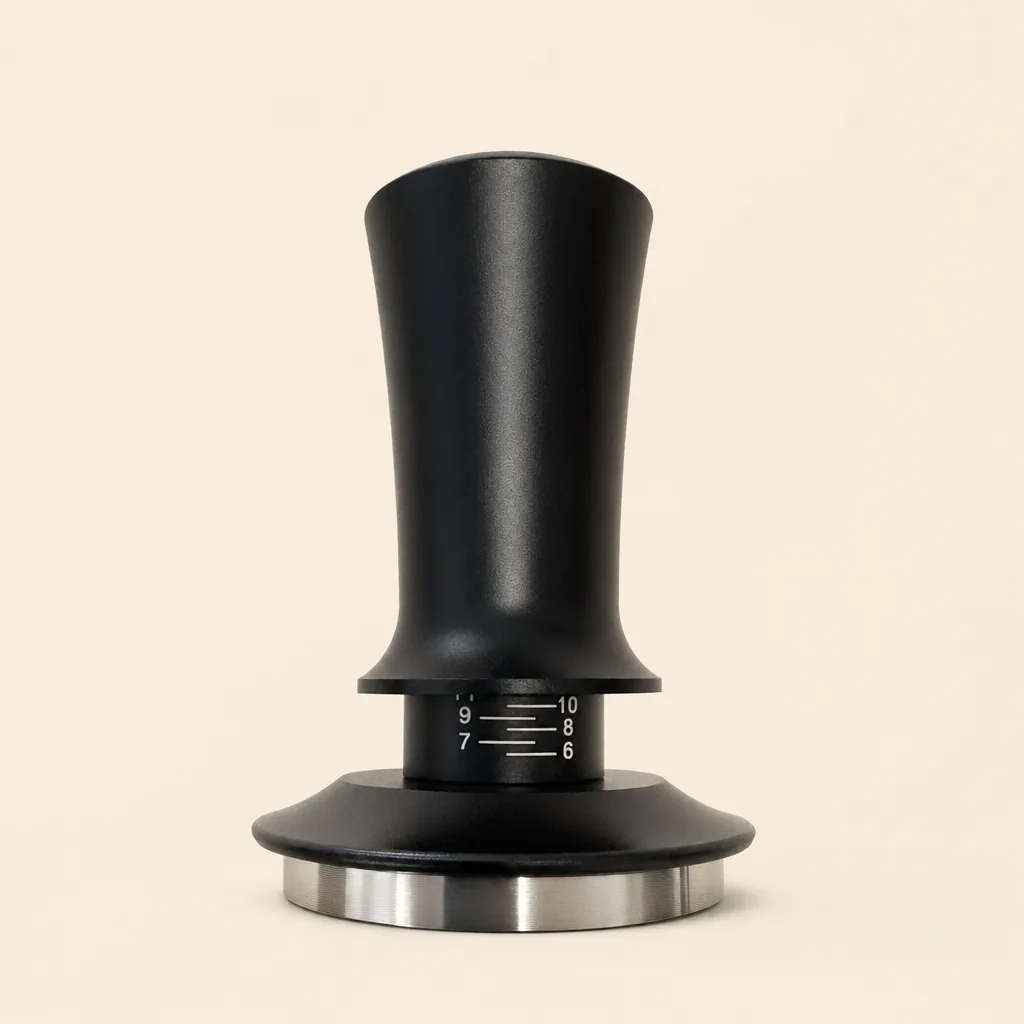
Ours carries a 304 stainless ripple base in all three diameters. Compare it against a flat-based candidate in the same correct size and you are choosing between a cleaner lift and a marginally simpler wipe-down — a real choice, and a small one. In the wrong size, neither face can help you.
Calibrated or plain
This is the criterion that splits the category in two. A plain tamper delivers whatever your arm delivers, and arms vary — between mornings, between moods, between the first shot and the fourth. Every variation changes the resistance of the puck, which means every diagnosis you make afterwards stands on a moving floor: you adjust the grind to fix what the press did, and tomorrow’s press quietly undoes the adjustment.
A calibrated tamper closes that loop with a spring that compresses to a set load and then gives way. Ours gives at 15 lb, fixed, chosen for domestic baskets holding 15 to 20 grams. The 30 lb figure that circulates online comes from commercial bars — deeper baskets, bigger doses, hundreds of shots a day — and how much tamping pressure you need traces how that number travelled home without its context. The value of 15 lb is not that it is a magic number; it is that it is the same number tomorrow, whoever presses.
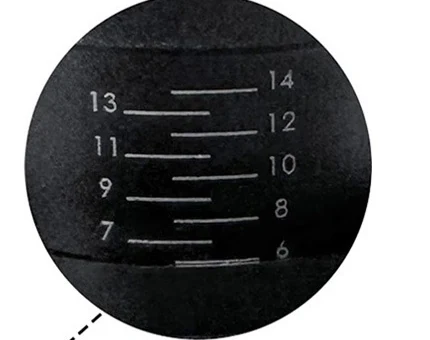
One reading note for listings in this category: the numbered ring on the stem is a depth collar, not a pressure dial. The spring’s load is fixed by design; the collar sets how far the base travels before the stop, marked 6 to 14, and you set it by hand once for your dose and then leave it. The whole mechanism — spring, collar, self-leveling base — is laid out on the calibrated tamper page.
Handle shape: straight or rounded
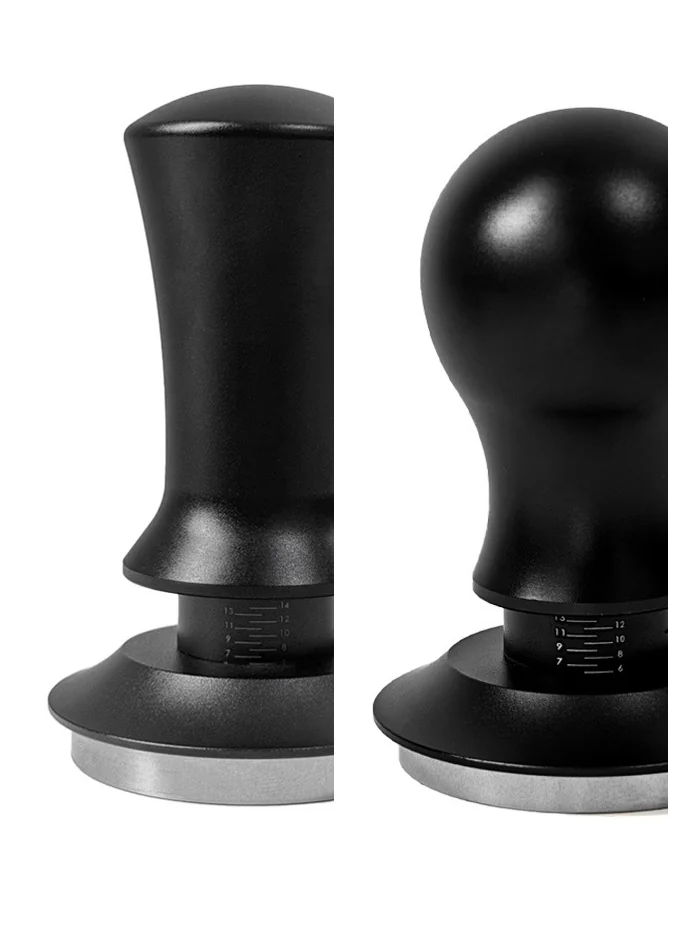
The last criterion is comfort, and comfort compounds: you will hold this object several times a day for years. Two shapes exist here, on an identical base, spring and collar. The straight handle is tapered and slightly narrower at the top — it suits a press that comes from the heel of the palm, and leaves room for a finger-and-thumb grip down near the collar. The rounded handle is a bulb that fills the palm — it suits a wrap-around grip where the press comes from the whole arm rather than the wrist.
There is no performance difference to agonize over; the bed cannot tell which handle was above the base. Take your espresso grip, imagine two seconds of straight-down pressure, and pick the shape your hand closes around. Among photographed buyer reviews the straight handle is the more common choice, though that partly reflects which sizes were bought most.
Materials that hold up on a coffee bar
A coffee bar is a mildly hostile place for metal: moisture in the air, oils on every surface, contact with a steel basket many times a day. The two materials on this tamper are there because they stand up to exactly that. The base is 304 stainless steel, which keeps its machined face and wipes clean of coffee oils. The handle is anodized aluminum, which takes daily handling without the finish dulling — with one standing exception, the dishwasher, whose detergent is precisely the thing that dulls anodizing.
Care is therefore short: a dry cloth across the base after use, and occasionally warm water and a soft brush through the grooves. The full routine, including the habits that shorten a spring tamper’s life, is in how to clean a coffee tamper. When you compare candidates, look for the alloy to be named: a listing that says only “stainless steel” or “metal” is leaving out the part of the specification that decides how the tool looks in year three.
The shortlist test, criterion by criterion
Five criteria, five tests, in the order they should be applied — this is the whole article in one pass.
| Criterion | The test | What it settles |
|---|---|---|
| Fit | The base matches the basket’s internal diameter: 51, 53 to 54, or 58mm | Whether the tamper is usable at all |
| Weight and balance | Pressed on a counter, the force runs straight down and the mass sits low | How much of the steadying work the tool does for you |
| Base shape | Flat for the simplest wipe-down, ripple for a clean release from a damp bed | What the bed looks like after the lift |
| Calibration | The load is stated and fixed — here, 15 lb | Whether two mornings press the same |
| Handle | Your natural grip closes around it: tapered straight or rounded bulb | Comfort, several times a day, for years |
Notice what the table does not ask for: adjectives. Every test either reads a number off the listing or takes ten seconds at the counter, and that is deliberate — adjectives are the one thing every listing in this category already has in abundance. The number a listing cannot hide is the diameter. The number it most often omits is the load. A candidate that states both, in your size, with the alloy named, has already answered more than the rest of the wall ever will.
The order matters more than the table suggests. Fit disqualifies; calibration separates; base shape and handle are preferences between tampers that already passed. Read any listing in that order and the wall of lookalikes sorts itself out in about a minute.
Where to go next
Put the criteria back together and the best coffee tamper describes itself: the diameter your basket actually measures, mass carried low over the base, a face that releases the bed cleanly, a known load that repeats every morning, and a handle your hand closes around without thinking. That is the specification. Everything else on a listing is photography.
Two pages take you the rest of the way: the size guide pins down which of the three diameters is yours, and the calibrated tamper page shows the spring and collar behind the 15 lb press. The buy box below carries all three sizes and both handle shapes.
Related reading: how to tamp espresso · how much pressure you need · what a coffee tamper is · ripple base vs flat base · tamper vs distribution tool · how to clean a coffee tamper · coffee tamper substitutes · tamping and wrist pain
On the product: the calibrated coffee tamper · which size fits your machine · Breville and Sage fitment · what buyers report