
Calibrated tamper: what the spring actually does
This page is about the mechanism rather than the purchase. If you want the sizing, that is the size guide; if you want the tool itself, it is on the main page. What follows is what the spring does, what it does not do, and how to tell the two apart when you are reading a product listing.
Why a fixed load beats a strong one
The instinct is that a firmer tamp makes a better shot. It does not, past a threshold that most people cross without trying. Once the bed is compressed enough that water cannot push it around, additional force changes very little about the extraction and quite a lot about your wrist.
What does change the extraction is variation. Press at twelve pounds on Monday and twenty on Thursday and you have changed the resistance of the puck between two shots you believed were identical. Every diagnosis you make after that is built on a moving floor. You adjust the grind to fix Thursday and Monday breaks. The value of a calibrated tamper is not that fifteen pounds is a magic number, it is that fifteen pounds is the same number tomorrow.
The three parts, and which one you adjust
Reading a listing in this category is confusing because three separate features get described with overlapping words. Here is what each part is.
| Part | What it does | Adjustable? |
|---|---|---|
| The spring | Fixes the load delivered to the bed, here 15 lb | No — fixed on this tamper |
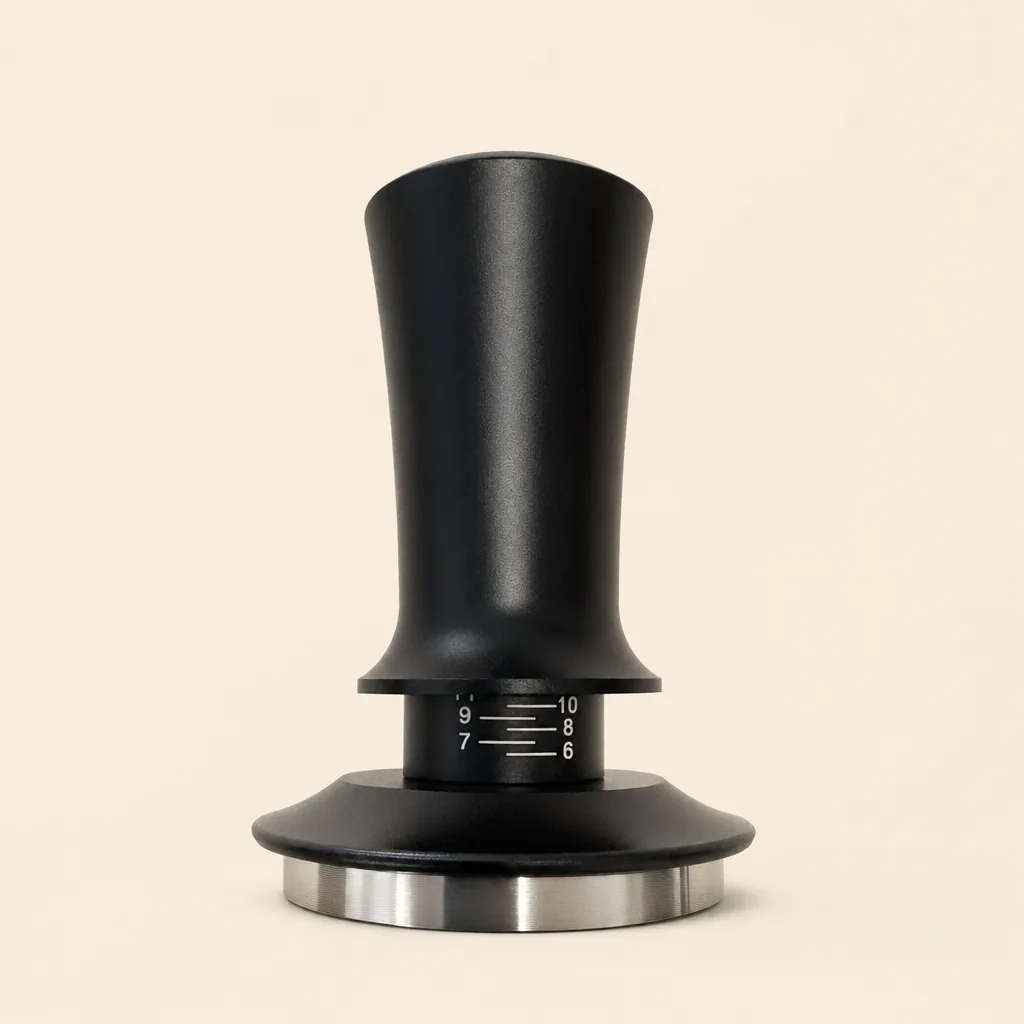
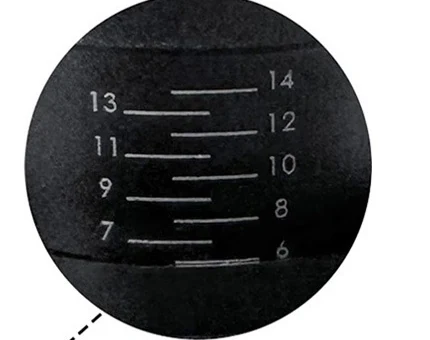
| The depth collar | Sets how far the base travels before the stop, marked 6 to 14 | Yes, by hand |
| The base | Seats on the basket rim, keeping the press square | No |
The confusion almost always sits between the first two rows. A numbered ring on a tamper looks like a pressure dial and is not one, and the mismatch between what people expect and what the collar does is the main source of disappointment with this category. It is a depth setting. Turn it to suit your dose, then leave it.
Which load, and why 15 lb here
The figure repeated most often online is 30 lb. It comes from commercial bar practice, where baskets are deeper, doses are larger and a barista is pulling hundreds of shots on equipment built for it. Applied to a domestic basket holding 15 to 20 grams, it is more force than the bed needs and considerably more than most people can apply consistently by hand.
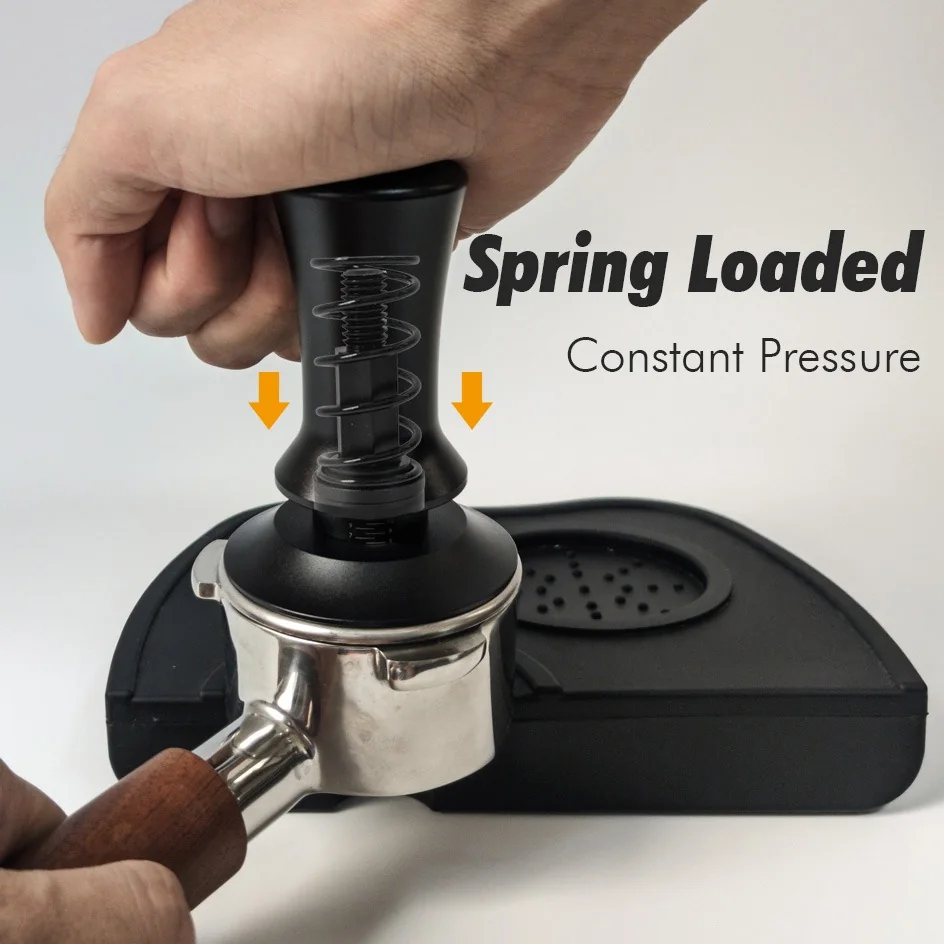
A 15 lb spring suits home baskets, and a load you can deliver comfortably is a load you deliver the same way at seven in the morning. The spring is fixed at that load: it is not swappable, and the collar changes depth rather than force. The whole tool is built around that one load being delivered identically, shot after shot, in a domestic basket.
Self-leveling, spring-loaded, calibrated
Three terms, heavy overlap, and listings use them almost at random. Spring-loaded describes the construction: there is a spring in it. Calibrated describes the consequence: that spring gives at a known load. Self-leveling describes the base: it seats flat on the basket rim, so a slightly crooked hand still produces a square press.
Most tampers in this category are all three at once, ours included, which is why you will see the same product listed under different names. What matters when you compare two listings is not which of the three words is used, but two concrete questions: what load does the spring give at, and is that load fixed or swappable. Everything else is phrasing.
Getting the most out of it
A calibrated tamper presses, and it presses the same way every time. Three habits let it work at its best. Level the grounds first, since the fixed load follows the surface it is given. Keep the grind in range, because resistance comes mostly from particle size. And lift straight up rather than twisting, so the surface you just made stays intact.
Level the bed first, get the grind into range, then let the tamper hold that baseline steady while you fine-tune. Used that way it earns its place quickly. Used as a fix for the two problems above, it disappoints, and knowing it up front is what makes it earn its place.
Keeping the mechanism working
There is very little to maintain, but the two things that shorten a spring tamper's life are both avoidable. The first is water. The mechanism sits in a sealed collar and has no reason to be submerged, since a tamper only ever meets dry grounds. Wipe the base with a dry cloth after use and keep the collar dry. If oils build up in the grooves of the base, warm water and a soft brush clear them without soaking the handle.
The second is the dishwasher, for the same reason plus one more: detergent dulls the anodized finish on the handle. Neither of these is a fragility specific to this tamper, it is true of every spring-loaded model in the category, and it takes about five seconds a day to avoid entirely.
The collar can be turned as often as you like. It is a threaded adjustment designed to be moved, so changing it when you switch beans or basket costs nothing. Most people set it in the first week and then never touch it again, which is rather the point of the tool.
Reading a listing in this category
If you are comparing several calibrated tampers, two questions separate them and the rest is presentation. What load does the spring give at, and can that load be changed. A listing that answers neither is describing a look, not a mechanism. Ours gives at 15 lb and cannot be changed.
The third question, once those are answered, is fit — and it outranks both, because a tamper with a perfect spring in the wrong diameter is worse than a flat one in the right diameter. The size guide settles that in a minute.
Calibrated tamper questions
What does calibrated actually mean here?
It means the spring inside the handle is set to compress at a specific load, in this case 15 lb, and to give way at that point. Calibrated refers to the force being fixed and repeatable. It does not mean the tamper can be set to different forces.
Can I change the spring for a heavier one?
Not on this tamper. The 15 lb spring is fixed and not interchangeable. The 15 lb load is the one that suits a home basket, and it is the one this tamper repeats every morning without you thinking about it. What you adjust here is the depth, using the graduated collar marked 6 to 14.
Then what does the numbered collar do?
It sets tamping depth, not force. Turning it changes how far the base travels into the basket before the spring reaches its stop. You adjust it when your dose or your basket depth changes. The load delivered stays at 15 lb whatever number the collar shows.
Is a self-leveling tamper the same thing?
Broadly yes. Self-leveling describes the base seating flat against the basket rim, which stops you pressing at an angle. Spring-loaded and calibrated describe the fixed load. Most tampers in this category do both, and the terms get used interchangeably in listings.
Related: espresso tampers explained · which size fits your machine · Breville and Sage fitment · how much pressure you actually need · buyer reviews